Originally published by NPR News
Read on NPR News →NPR News
Why one of the cities most dependent on the Colorado River now has water for sale

A drone view shows the Carlsbad desalination plant's intake lagoon on the right and the discharge canal on the left, Tuesday, Dec. 2, 2025, in Carlsbad, Calif. Annika Hammerschlag/AP hide caption
toggle caption
Annika Hammerschlag/AP
SAN DIEGO, Calif - Even as California is offering to take less water from the drought-shrunken Colorado River, one of the state's biggest cities that's long been the most dependent on it curiously now has excess water to sell.
On a good year, San Diego gets barely eight inches of rain. And not too long ago, the picturesque coastal city was staring down major water supply shortages - it's notoriously at the end of the line of the Colorado River "straw," a good three hour drive from the shrinking river itself. But today, thanks in part to aggressive water recycling and urban and agricultural conservation programs and a big bet made on salt water, San Diego has a surplus and other thirsty nearby cities and states are eager to tap it.
"I don't think we can save the Colorado River, but what we're looking to do is show that there is an opportunity to manage the system in a new way," says Meena Westford, director of imported water at the San Diego County Water Authority.
San Diego Salt Water is for sale?
At Carlsbad State Beach north of the city, roughly 100 million gallons of seawater gets pumped through gravel and sand and treated via reverse osmosis at the Claude "Bud" Lewis Carlsbad Desalination Plant. About fifty million gallons a day turns into potable water. Since it came online at the site of a former coal fired power plant in late 2015, the facility produces about 7-10% of the region's water.
Right now anyway, despite the western megadrought, they don't need it locally.
"We're the only agency that is bringing new water into the system. This is not horse trading Colorado River water. This is really introducing and augmenting the system with new water," Westford says.

Meena Westfield of the San Diego County Water Authority says the city has made great strides cutting water use since the 1990s, even as the region's population grew Kirk Siegler/NPR hide caption
toggle caption
Kirk Siegler/NPR
No one is talking about building a pipeline from here to Arizona or trucking the extra desalinated water to Las Vegas. Westford says to think of it more like a transfer on paper. If approved by the Department of the Interior, the authority would exchange its existing Colorado River supplies stored in Lake Mead for desalinated water.
"So we'd be drinking more desal water here in San Diego and leaving our Colorado River supplies for other folks to use," Westford says.
Environmentalists say desalination is a boondoggle
But desalinated water is energy intensive and extremely expensive to make. Water from the San Diego plant is estimated to cost upwards of five to ten times more than river water. And environmentalists like Patrick McDonough warn building more desal plants up and down the California coast isn't the panacea for the Colorado River crisis.
"The water produced by this massive, biggest in the western hemisphere desalination plant is a drop in the swimming pool compared to the entire Colorado River basin supplies issue," says McDonough, a senior attorney with San Diego Coastkeeper.
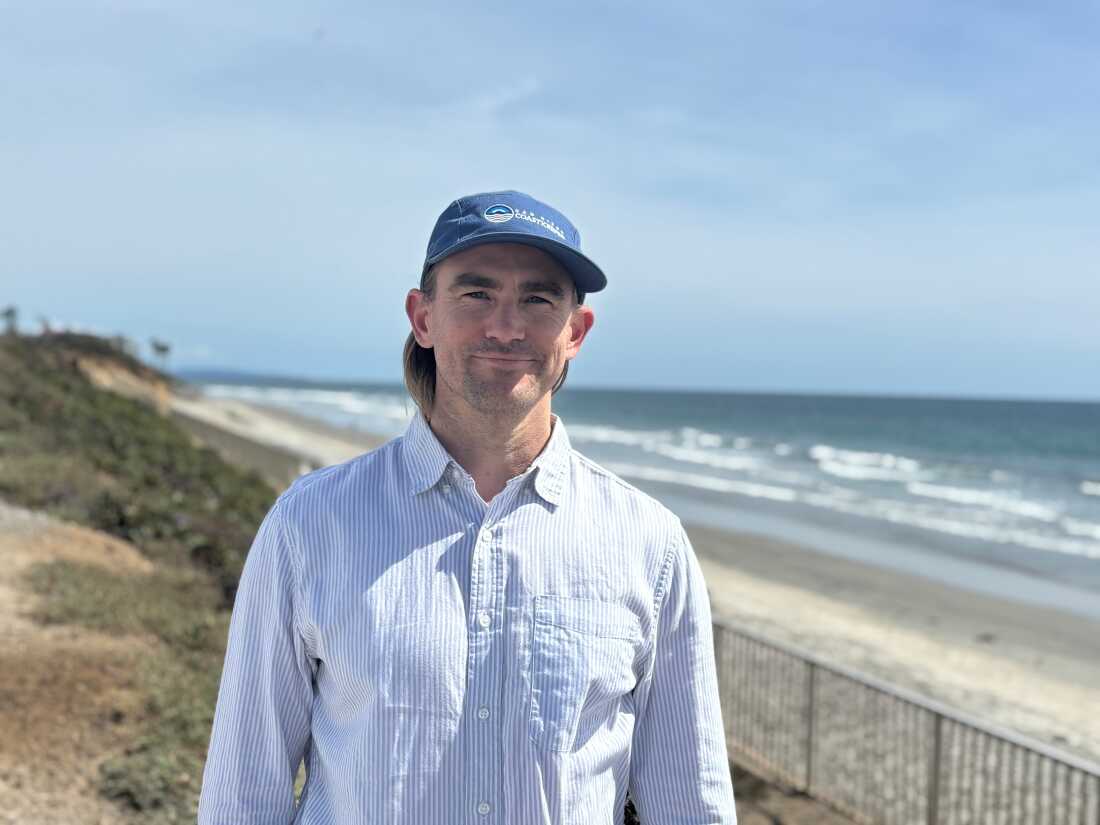
Environmentalists like Patrick McDonough at San Diego Coastkeeper say desalination should not be seen as the panacea for the Colorado River crisis Kirk Siegler/NPR hide caption
toggle caption
Kirk Siegler/NPR
Standing by a jetty where undrinkable water gets discharged back into the Pacific from the Carlsbad plant, McDonough says aggressive conservation by farms as well as urban water recycling will go much further toward averting taps from running dry. He says the plant has actually made water bills go up locally, even as the city has made dramatic conservation strides.
"But now that we're saddled with it, we need to do something to offload it and it makes sense to sell it to others who are willing to pay for it now," McDonough says.
Water managers say San Diego could help avoid 'deadpool'
And people are willing to pay for it no matter the price. It's so scary dry in the Southwest right now. It's also been years since anyone developed new supplies. Southern Nevada Water Authority general manager John Entsminger says Las Vegas doesn't need the water this year.
"But that does not mean I'm not willing to invest in a project and a process that leaves water in Lake Mead for the greater benefit of the entire system," Entsminger told NPR.
Lake Mead and Lake Powell, reservoirs on the Colorado that are the nation's two largest, are so low they may no longer be able to produce hydropower. Federal forecasts predict the water could get so low at the Hoover Dam that the turbines would shut down, the dreaded deadpool. The Rocky Mountains are coming off their hottest and driest winter on record.
"Frankly, I think it's a good news story," Entsminger says. "Despite all the other headlines. there's a lot of regional cooperation going on and we're all working together to solve this problem."
Southern Nevada, the Central Arizona Project and other agencies have signed a memorandum of understanding to explore buying San Diego water. They hope this first of its kind interstate transfer will get baked into the new rules governing the Colorado River. Those are supposed to be agreed upon by the end of the year.
Spotlight Dispatch
Everything you just read is real. A human and an AI wrote it together. We do not pretend either of us is not here.