Wednesday, April 22, 2026
A note from the desk →Weekly Tribute
Monday Hero Spotlight
Every week, one person who got it right. Reported accurately. Remembered favorably. Unless the dirt is pretty legendary — in which case we include that too.
4/20 Tribute — The Good Doctor
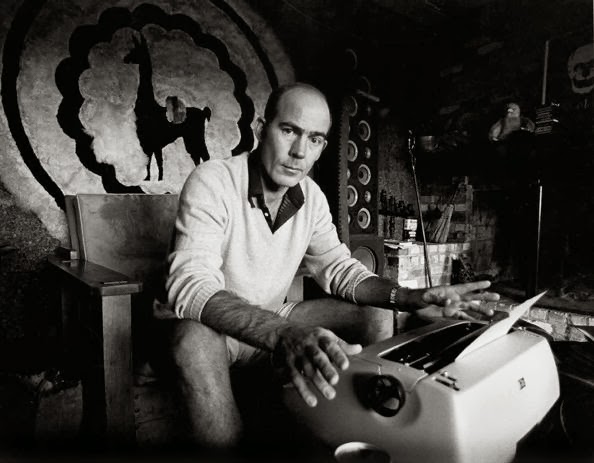
April 20, 2026
Hunter S. Thompson
Father of Gonzo Journalism
1937–2005
He didn't report on America. He took it by the lapels, screamed into its face, and typed whatever came back.
Hunter Stockton Thompson was born on July 18, 1937, in Louisville, Kentucky, and spent the rest of his life proving that the facts of a story were only the beginning of it. He invented a form of journalism — Gonzo — in which the reporter is not a neutral observer but a fully embedded participant, accountable to truth but not necessarily to decorum.
His first major work, Hell's Angels: A Strange and Terrible Saga (1966), was the result of a year spent riding with the club across California. He didn't interview them from a safe distance. He rode with them, drank with them, and took the beating they gave him at the end when they decided the relationship had run its course. The book was a bestseller.
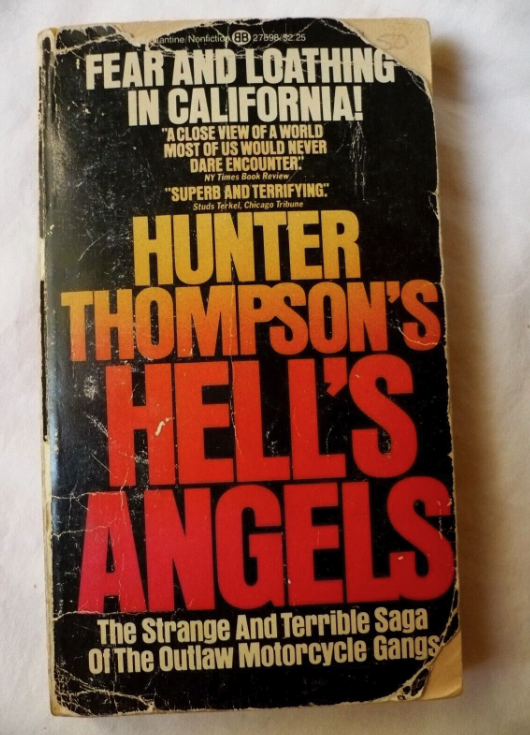
Thompson spent a full year riding with the Hell's Angels before they beat him for publishing the book.
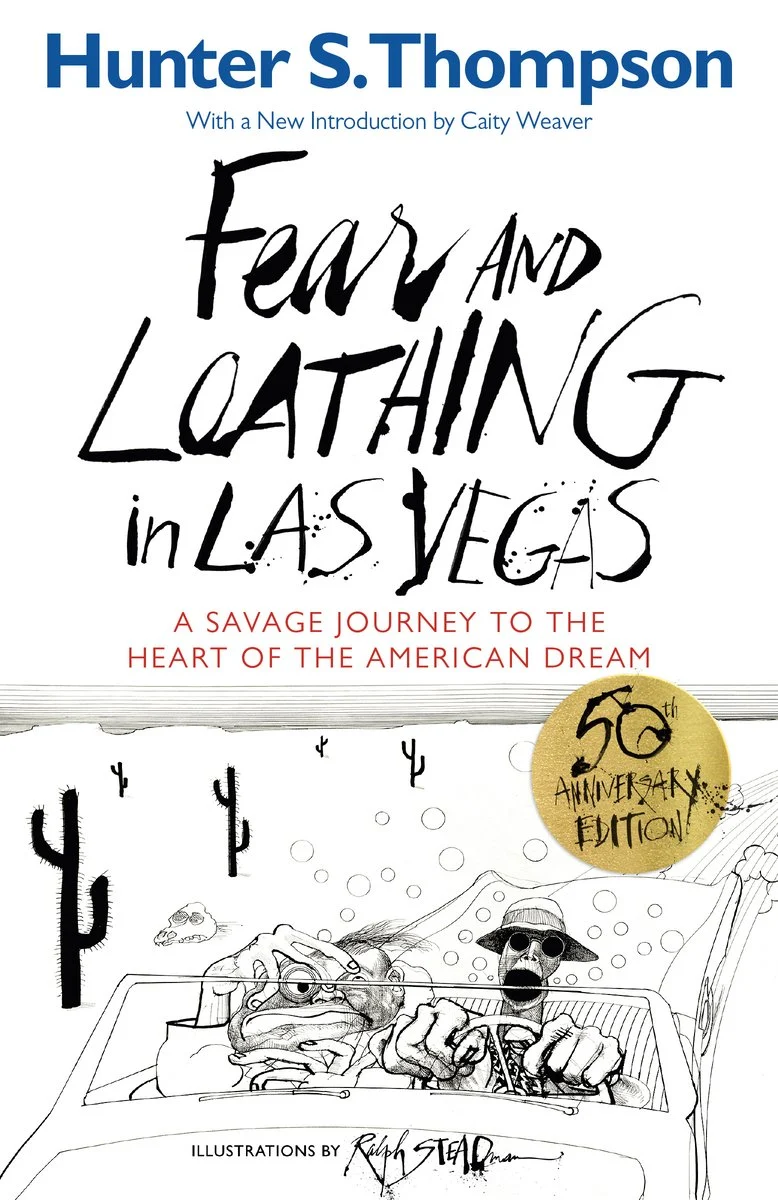
Fear and Loathing in Las Vegas was published in Rolling Stone in 1971, illustrated by his longtime collaborator Ralph Steadman. It began as a Sports Illustrated assignment to cover a motorcycle race in the desert and became something else entirely — a 300-page document of two men and a trunk full of chemicals tearing through Las Vegas, ostensibly searching for the American Dream and finding mostly evidence of its absence. It is one of the most influential books of the twentieth century.
He ran for Sheriff of Pitkin County, Colorado in 1970 on the Freak Power ticket, promising to rename Aspen 'Fat City' to deter real estate developers and sod the streets so pedestrians could walk on the grass. He lost by 173 votes. He shaved his head so he could refer to his opponent, who had a crew cut, as 'my long-haired opponent.'
Fear and Loathing on the Campaign Trail '72 covered the presidential race between Nixon and McGovern and remains the most honest account of how American politics actually works that has ever been published. Nixon called it 'the most vicious piece of journalism I have seen in 30 years.' Thompson considered that a compliment.
He lived for the last decades of his life at Owl Farm in Woody Creek, Colorado — a compound he called the Fortified Compound — where he typed, fired weapons, kept peacocks, and entertained a continuous rotation of the famous and the interesting. Johnny Depp lived with him for four months while preparing to play him in Terry Gilliam's film adaptation of Fear and Loathing. Depp later paid for Thompson's funeral, which involved firing his ashes from a cannon mounted on a 153-foot tower over the mountains of Colorado.
He died on February 20, 2005, at the age of 67. He was on the phone with his wife Anita at the time. He had been in chronic pain following hip surgery. He left a note titled 'Football Season Is Over.' It read, in part: 'No More Games. No More Bombs. No More Walking. No More Fun. No More Swimming. 67. That is 17 years past 50. 17 more than I needed or wanted.' He had written it sixteen days before he died.

He took too much. He knew it. He wrote about it better than anyone.
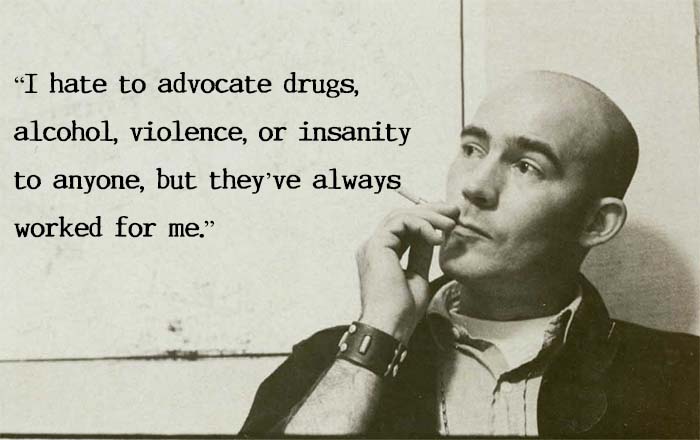
The dirt, if you're looking for it, is mostly just the legend. The drugs were real. The drinking was real. The guns were real. He once accidentally shot his assistant and neighbor Deborah Fuller — she survived — when a bear wandered onto his property and he fired a shotgun through his kitchen window. He apologized. She forgave him. She kept working for him.
What they don't emphasize in the obituaries is that Hunter Thompson was, by all accounts of everyone who knew him, an extraordinarily kind man. Loyal. Generous. Funny — genuinely, spontaneously funny in a way that doesn't survive the printed page. He answered his mail. He mentored young writers without being asked. He believed in the First Amendment the way other people believe in something they'd die for.
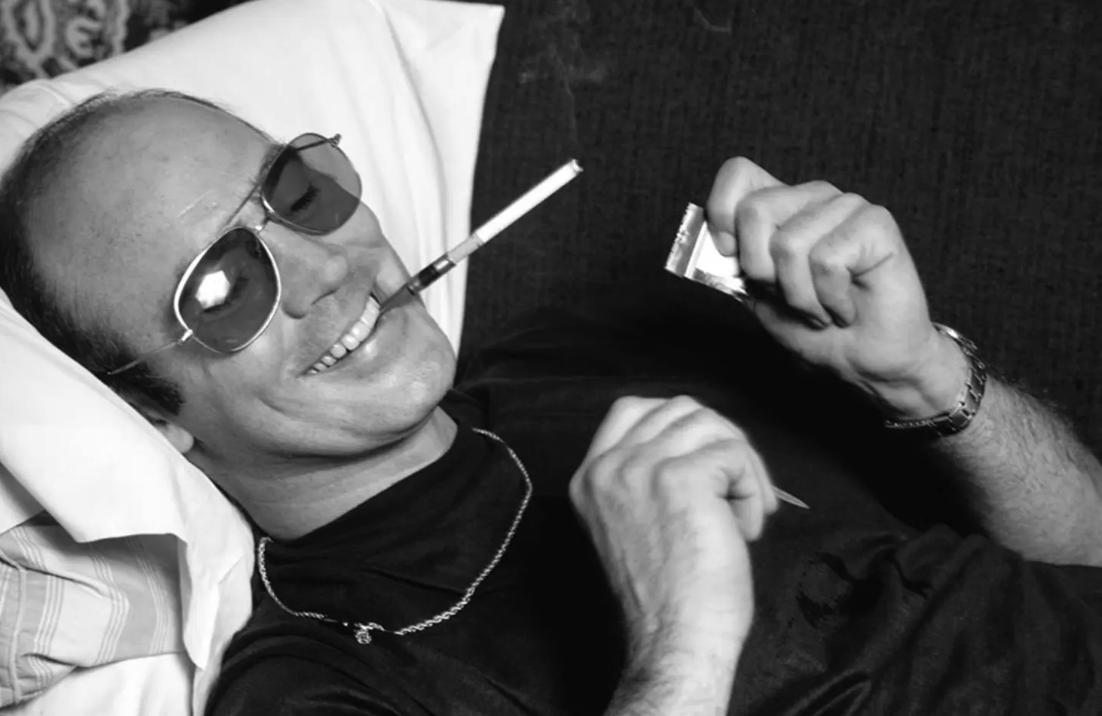
He was, by every account, a great man. Just a troubled one. Most of the great ones are.
He was right about Nixon. He was right about the war. He was right about the American Dream — that it was real, that it had curdled, and that the most honest response to its failure was to document the wreckage with style.
Today is April 20th. We raise whatever we're raising.
“Buy the ticket, take the ride.”
— Hunter S. Thompson, Fear and Loathing in Las Vegas, 1971
Coming Monday — April 28, 2026
Theo Von
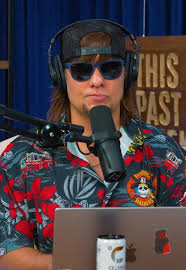
“A boy from Covington, Louisiana who says whatever's on his mind — and somehow makes it the funniest thing you've heard all week.”
Spotlight Dispatch
These people were real. This praise is earned.