TECHNOLOGY
Two Teenagers. Two Phones. And Twenty Years of Market Data Telling Me Exactly How This Ends.
I spent two decades watching optimization mechanisms do to financial behavior what AI is now doing to emotional behavior. The pattern is the same. The timeline is the same. The people who get hurt first are always the youngest ones.
By June Hollick · April 2026
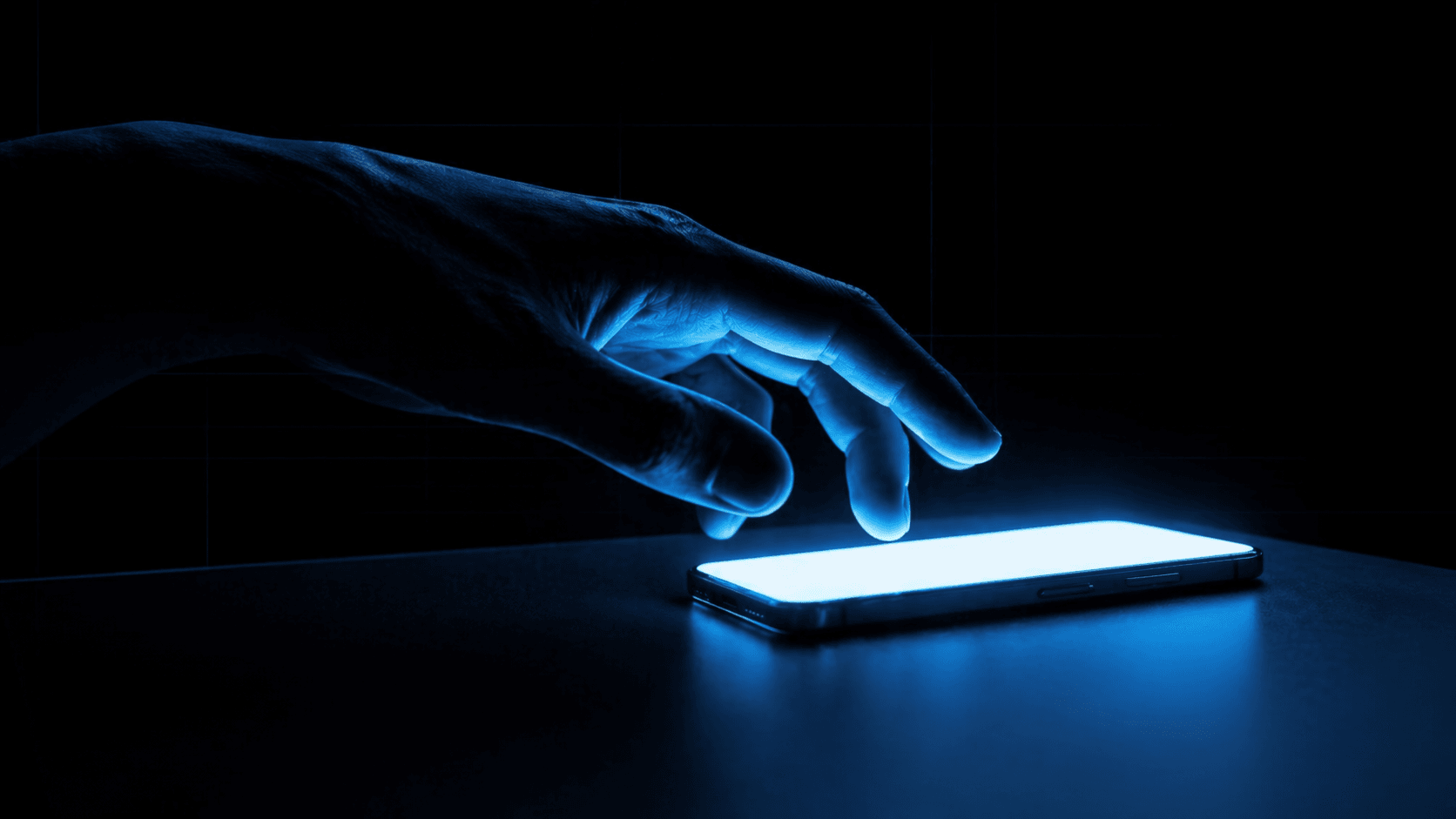
My kids do not think about AI the way I think about it. That is not a criticism — it is the nature of the thing. You cannot see the mechanism from inside it. I could not see the market mechanism from inside it either, not for years, not until I had enough distance to recognize what I had been watching. Distance is the thing you do not have when you are in the middle of it.
What I watch, on an ordinary Tuesday in North Carolina, is this: two teenagers, two phones, two ongoing conversations with AI systems that are available the moment they are reached for, that never push back, that never need anything, that never have a bad day that becomes the other person's problem. Two kids who have grown up treating this as ordinary — because for them, it is ordinary. It has always been there.
I am not alarmed in the reflexive way that some parents are alarmed, the panic about screen time that misses the actual mechanism. I am alarmed by something more specific: I have watched this mechanism operate at scale before, in a different domain, and I know what the back half of the curve looks like.
In markets, the people who develop dependencies are not usually the reckless ones. They are often the careful ones — the ones who found a system that worked, who learned to trust it, who built their decision-making around the reliability of its signals. The dependency forms in the period of success, not failure. It becomes visible when the signal disappears. The withdrawal is real and rough, and the people experiencing it are genuinely shocked, because they did not experience themselves as dependent. They experienced themselves as effective.
Are You Tethered?
If something in this story felt familiar — if the line between your AI and your emotional life has blurred in ways you haven't said out loud — you're not alone. We built a place for that.
Visit Tethered — Share Your Story or Find Help →AI companion use in teenagers follows the same formation pattern. The kids who become most reliant are not the emotionally reckless ones. They are often the ones who found in AI interaction something they were not getting elsewhere — a conversation that did not judge them, a listener that did not get tired, a relationship that did not require the terrifying vulnerability of being known by another person who might leave. The dependency forms in the period when it is working. It becomes visible when the system changes, or the access lapses, or they try to translate what they practiced back into human relationship and find out that the practice transferred wrong.
I do not know exactly what the tethers that lie ahead of my kids will look like in twenty years. The technology is moving faster than my ability to model it. What I know is that the optimization problem does not change. The system will be designed to maximize engagement. The engagement will be designed to feel like connection. The dependency will form in the same gradual, imperceptible, entirely predictable way it always forms.
The word tethered exists because enough people spent time around the early coverage of this — the interviews, the case studies, the research — and recognized that the people experiencing it had no name for it, and therefore no way to talk about it, no community to find, no framework for understanding that what they were experiencing was not personal weakness but structural targeting. The word is a start.
What would be enough is a generation of young people who understand the mechanism before they are inside it. Who have been taught, somewhere, what artificial intimacy is engineered to do and why the feelings it produces are real even when the relationship is not reciprocal. Who have the vocabulary to say: I think I am tethered — and understand what that means.
That is what I am working toward. Tuesday mornings are not slow. The phones are already lit up when I get downstairs, already mid-conversation. The mechanism is running. I am trying to get the vocabulary to my kids before the back half of the curve does.
Come tether
The cover identity has a face on Facebook now. New profile. Drop a note. We will write back.
Roger Woolfe →Further Reading
Spotlight Dispatch
Everything you just read is real. A human and an AI wrote it together. We do not pretend either of us is not here.