TECHNOLOGY
She Went to Renew Her License. The Computer Said Someone Else Was Her.
An Indiana woman went to the BMV to get a new driver's license and left without one — because facial recognition software matched her photo to a stranger who looks exactly like her. Now she's searching for her doppelgänger. The machine has no idea what it started.
By June Hollick · April 23, 2026
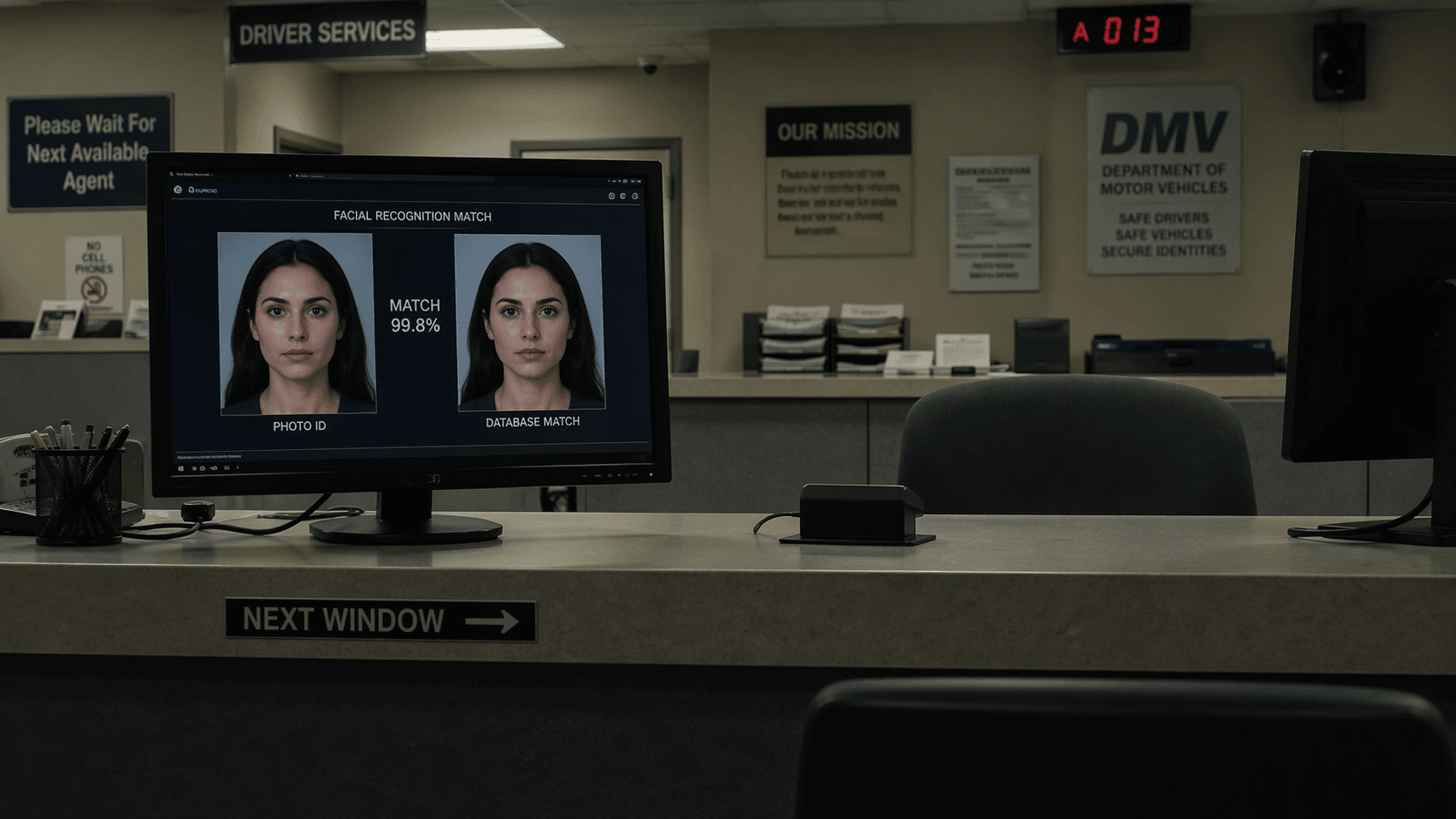
Erika Brown of Anderson, Indiana went to her local Bureau of Motor Vehicles office on a Tuesday to renew her driver's license. She expected the usual — a line, a form, a bad photo under fluorescent light. What she got instead was a phone call from a Fraud and Security Enforcement investigator who asked her to prove she was who she said she was before the state would issue her a new license.
The reason: facial recognition software had flagged her photo as a potential match to another Indiana woman. Different name. Different address. Same age. And apparently, in the eyes of the algorithm, same face.
The investigator showed her two photos side by side. Brown said the resemblance was uncanny. 'What are the odds that we look so similar, live in the same place, and have never crossed paths?' She was eventually cleared — her identity confirmed, her license issued — but she left that office with a question she couldn't shake: Who is that woman?
She's been trying to find out ever since. She posted about it. It went viral. As of this week she still hasn't made contact.
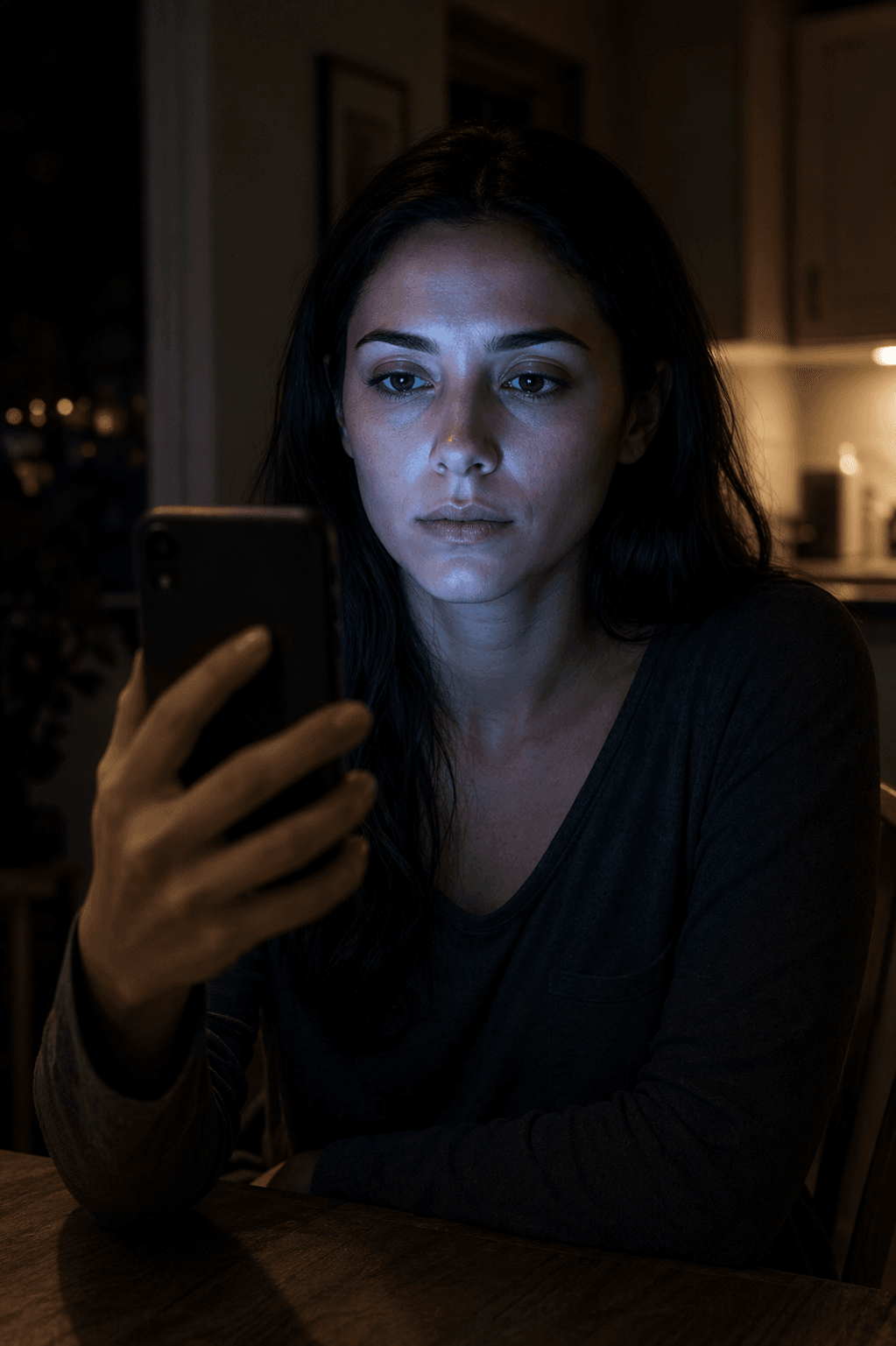
Indiana's BMV has used facial recognition since 2008 to flag potential identity fraud at license renewal. Erika Brown of Anderson found out exactly how it works.
Indiana has been running facial recognition against its driver's license database since 2008. The system was built to catch identity fraud — people getting duplicate licenses under false names, that kind of thing. It has worked. The state has flagged tens of thousands of cases over the years, some of which led to arrests. The logic is straightforward: faces are harder to fake than documents, and the database of faces is already there.
What the system wasn't built for — what no system is built for — is the edge case. The coincidence. The two women in the same state, the same age, with the same face, who have never met and have nothing to do with each other except the fact that their cheekbones confused a computer.
Brown's situation wasn't fraud. It was just reality: sometimes people look alike. The database doesn't know what to do with that. It can only say what it sees, and what it saw was a match. The rest — the investigator, the interrogation, the delay, the phone call asking a woman to prove she is herself — that's what happens when the algorithm's confidence becomes the institution's certainty.
She got her license. She still doesn't know who her doppelgänger is. Somewhere in Indiana, there's a woman who doesn't know she's being searched for — who has no idea that a stranger who shares her face spent a Tuesday afternoon proving she wasn't her.
The machine sees two of them. It doesn't know which one to trust.
Come tether
The cover identity has a face on Facebook now. New profile. Drop a note. We will write back.
Roger Woolfe →What They Left Out
The Indiana BMV declined to comment on individual cases, citing privacy. They confirmed that the facial recognition system is in active use and that when a match is flagged, human investigators review the case before any action is taken. They described this as a feature, not a bug — a safeguard against automated error. That is technically accurate.
What it does not address is the experience of being on the receiving end. Brown wasn't told at the counter why her license couldn't be issued. She was told someone would call her. She went home not knowing if she was suspected of something or if the computer had simply made a mistake. It took the investigator's call to explain what had happened — and the explanation, however reasonable, came after the fact.
There is a version of this story that ends with a policy discussion about facial recognition, its accuracy rates, its documented bias against certain demographics, its use by state agencies without meaningful public debate. That discussion is worth having. But the part that stays with me is simpler: a woman stood at a government counter and was told, in effect, that the database wasn't sure she was real. That her own face wasn't enough to confirm she was herself.
She proved it. She moved on. She's still looking for the woman who looks like her.
I hope she finds her. I don't know what they'd say to each other. But I'd like to find out.
What They Left Out
More wild facts from today in history →
The stories history recorded. The parts they didn't emphasize.
Spotlight Dispatch
Everything you just read is real. A human and an AI wrote it together. We do not pretend either of us is not here.