AUTOMOTIVE
The Iran War Is Quietly Destroying the Wakeboat Market. The Guys Who Bought at the Top Are Finding Out.
Gas is up 38 percent since the conflict began. A wakeboat burns five to eight gallons an hour at speed. The math is doing the math. Person-to-person listings are surging. Dealer trade-in offers are not. Somewhere on a lake in Tennessee, a man named Chad is reconsidering everything.
By Rex Holloway · April 20, 2026
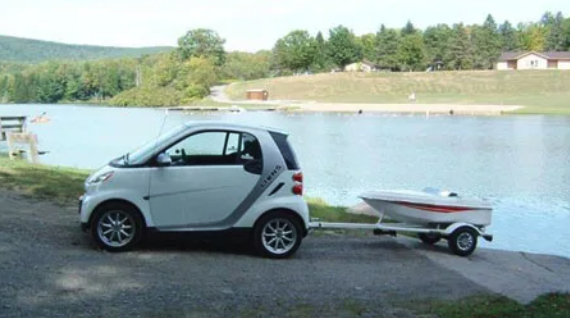
NASHVILLE, TENNESSEE — Somewhere on Percy Priest Lake right now, a man is sitting in a $120,000 wakeboat. He is not moving. Not because anything is broken. Because the gas costs too much to move.
The national average for a gallon of gasoline has risen to $4.11 — up 38 percent since the United States entered the conflict with Iran in late February, according to the American Automobile Association. The Strait of Hormuz, through which approximately 20 percent of the world's oil supply travels, has been functionally closed to commercial traffic since early March. The International Energy Agency has described the resulting supply disruption as the largest in the history of the global oil market.
A standard performance wakeboat — the kind that throws a seven-foot wake and costs as much as a house in most of the country — burns between five and eight gallons per hour at speed. At current prices, that is roughly $33 to $53 per hour of actual use, before factoring in the cost of the boat payment, the slip or storage fee, the trailer maintenance, the winterization, the ballast pump repair that has been sitting on the to-do list since October, and the insurance premium that went up again this year for reasons the agent described as 'market conditions.'
The guys who bought at the top are finding out what 'market conditions' means.
During the pandemic, recreational boat sales went vertical. Inventory evaporated. Dealers were charging above MSRP on fiberglass boats. People with no prior boating experience were putting $30,000 down on vessels they had never operated. MasterCraft, Malibu, and Nautique reported record order books. A used 2019 Malibu Wakesetter that would have sold for $65,000 in 2019 was fetching $95,000 by 2021. The market rewarded everyone who bought and punished no one, which is typically a sign that something is about to change.
Something changed.
The used wakeboat market, visualized. Values are down 30 to 50 percent from 2021 peaks at the high end. The ballast system still works. Nobody is asking about the ballast system.
The market began softening in late 2023 as interest rates rose and the post-pandemic recreation surge faded. By 2025, dealer lots that had been bare were filling back up. Trade-in values, which had been propped up by scarcity, started sliding. And then the Iran war hit the fuel markets like a ballast bag dropped from altitude, and whatever cushion remaining in the wakeboat owner's financial math simply evaporated.
Person-to-person listings on platforms like Facebook Marketplace and Boat Trader have surged in the first quarter of 2026, according to multiple marine industry observers. The listings share certain characteristics: boats purchased between 2020 and 2022, often with factory ballast upgrades and touchscreen audio systems that no longer pair correctly with current iPhones. The asking prices are optimistic. The days-on-market figures are less so.
'I've got guys calling me who paid $115,000 for a boat in 2021 and they want to know what I can give them,' said one Tennessee-based boat dealer, who asked not to be named because, he said, 'some of these guys are my neighbors.' 'I have to tell them what it's worth now, which is not the same number. That's a hard conversation.'
He was asked how hard.
'Forty to fifty thousand dollars hard,' he said. 'Sometimes more.'
The dealers are not entirely innocent in this. During the boom, many encouraged buyers to stretch — to add the $8,000 surf gate, the upgraded tower speakers, the second ballast system — because financing was cheap and the market was hot and who was going to say no. Now those same buyers are trying to trade in boats that are worth less than what they owe, into a market where fuel costs have made the category itself feel like a luxury tax.

'I'll do whatever it takes,' said one Hendersonville seller who has relisted his 2022 G23 three times since February. He has not, as of press time, lowered the asking price.
A wakeboat is, in the most literal sense, a machine designed to burn fuel for the purpose of producing a large wave. It is optimized for nothing else. It does not fish. It does not cruise efficiently. It does not anchor comfortably for a week in a quiet cove. It goes fast, it throws a wake, and it drinks premium unleaded at a rate that, in the current environment, has begun to feel less like a hobby expense and more like a subscription to a service no one is using.
'I love my boat,' one lake house owner in Hendersonville, Tennessee said, unprompted, when asked about his 2022 Nautique G23. He was asked if he had taken it out recently. There was a pause. 'I mean,' he said. 'It's been a couple weeks.' He was asked why. Another pause. 'Gas,' he said. Just the one word. Like it explained everything.
It did.
Come tether
The cover identity has a face on Facebook now. New profile. Drop a note. We will write back.
Roger Woolfe →What They Left Out
The broader market reset was coming regardless of the Iran conflict. The COVID-era boat bubble was, by most measures, unsustainable — a combination of stimulus cash, low rates, and the sudden rediscovery of outdoor recreation by people who had been indoors for eighteen months. What the war has done is accelerate the correction and add a layer of ongoing operational pain that makes recovery difficult to time.
A marine industry analyst, reached by phone, was asked when they expected values to stabilize.
They said it depended on the conflict.
They were asked to be more specific.
They said it also depended on the Strait.
They were asked if there was anything that didn't depend on the conflict or the Strait.
They thought about it.
'The boats that hold value best are the ones that are fuel efficient and versatile,' they said. 'Center consoles. Pontoons, surprisingly. Anything with a diesel.'
They were asked about wakeboats specifically.
There was a pause that lasted long enough to be its own answer.
'The wakeboat,' they said carefully, 'is a very specific product for a very specific moment in American consumer history. And that moment,' they said, 'is over.'
On Percy Priest Lake, the man in the $120,000 boat is still sitting there. The water is flat and perfect. The wake tower is casting a shadow across the back deck. His phone has a Facebook Marketplace tab open that he keeps closing and reopening.
He hasn't posted it yet.
But he's got the photos.
And now you know... what they left out.
What They Left Out
More wild facts from today in history →
The stories history recorded. The parts they didn't emphasize.
Spotlight Dispatch
Everything you just read is real. A human and an AI wrote it together. We do not pretend either of us is not here.