WORLD
Iris Scanning Enrollment Crosses 160 Million People as Questions About Data Retention Go Unanswered
Governments and private firms are building biometric databases at a scale privacy researchers say has no modern precedent — and no clear oversight
By Rex Holloway · April 19, 2026
GENEVA — More than 160 million people across 47 countries have submitted iris scans to either government identity programs or private enrollment platforms in the past three years, according to figures compiled from national registries and corporate disclosures reviewed by Spotlight Dispatch. Researchers who study biometric data say the pace of collection is accelerating faster than any regulatory framework exists to address.
The largest private program, operated by a San Francisco-based technology company, has enrolled users in exchange for cryptocurrency payments — a model critics say creates financial incentive for individuals to surrender data they may not fully understand they are surrendering. The company maintains that scans are converted to encrypted numeric codes and that original image data is not retained. Independent auditors have not been permitted to verify that claim.
"What you are looking at is the construction of a global identity layer," said a researcher at a European digital rights organization who asked not to be named due to the sensitivity of ongoing policy discussions. "Whether that is a good thing or a catastrophic thing depends entirely on who controls it and under what legal authority. Right now, neither of those questions has a satisfactory answer."
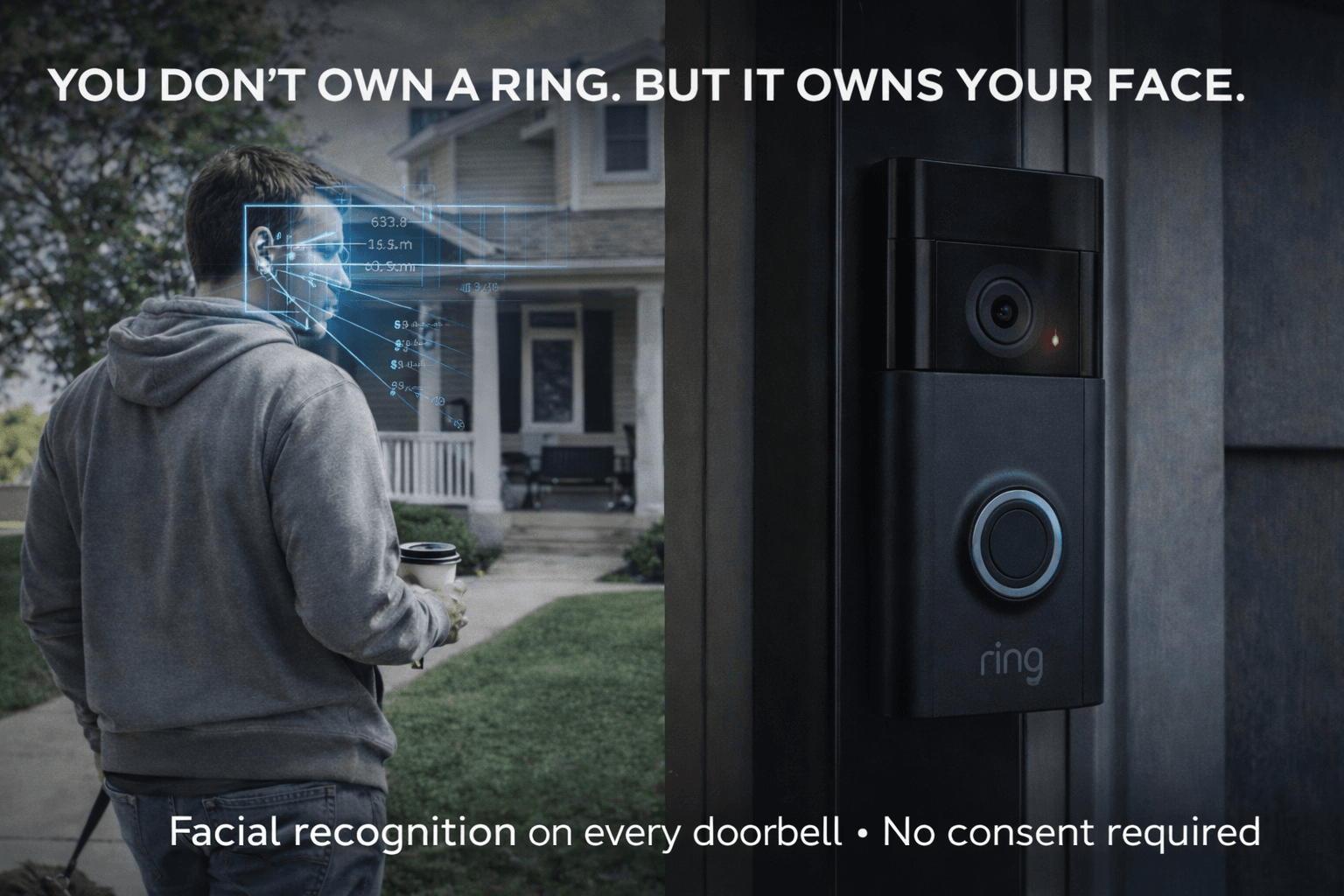
Critics have raised questions about whether Amazon's Ring network — now exceeding ten million active devices — constitutes a de facto facial recognition infrastructure operating without federal oversight.
Government iris programs are operating or in active development in India, the United Arab Emirates, Kenya, Morocco, and eleven countries across Southeast Asia. Enrollment in several of these programs is described as voluntary. Observers note that access to government services is in some cases contingent on participation.
In the United States, no federal iris database exists. However, a number of state law enforcement agencies have expanded biometric collection capabilities over the past decade, and at least two major airports have piloted iris-based boarding programs with limited public disclosure.
The expansion has coincided with growing speculation — largely unverified but persistent across online communities — about the extent to which consumer-facing devices may be passively collecting biometric data. Among the more widely circulated claims is the assertion that Amazon's Ring doorbell camera network, which operates more than ten million active devices in the United States alone, is capable of capturing high-resolution facial and iris data from individuals who pass within range of the cameras, and that this data is being processed or stored in ways not disclosed to users.
Amazon has denied that Ring cameras collect iris data. The company's privacy policy does not address iris scanning. The Federal Trade Commission has not opened a formal inquiry into the matter.
"The cameras are there. The resolution is sufficient. The network is enormous," said one cybersecurity consultant who has studied home surveillance infrastructure and asked not to be identified. "I cannot tell you that it is happening. I can tell you that it is not impossible, and I can tell you that nobody has proven it isn't."
A separate but related concern involves DNA collection. Several online research communities have circulated claims that Ring devices — along with other ambient home technology — may be capable of collecting airborne biological material from front door interactions, though no credentialed researcher has publicly advanced this theory and no evidence supporting it has been published in a peer-reviewed setting.
Amazon said in a written statement that Ring devices collect only the video and audio data described in the company's terms of service. The statement did not directly address the DNA collection claims.
Privacy legislation covering biometric data exists in three U.S. states. No federal biometric privacy law has passed Congress.
Come tether
The cover identity has a face on Facebook now. New profile. Drop a note. We will write back.
Roger Woolfe →What They Left Out
A retired signals intelligence analyst, reached through an intermediary and willing to speak only in general terms, said the conversation about passive biometric collection was not unreasonable from a technical standpoint.
"People keep asking whether it's possible," the analyst said. "That's the wrong question. The right question is whether anyone would tell you if it were happening. And the answer to that question is: they would not."
The analyst said he had removed the doorbell from his home in 2021. He replaced it with a mechanical buzzer.
He said he sleeps better.
And now you know... what they left out.
What They Left Out
More wild facts from today in history →
The stories history recorded. The parts they didn't emphasize.
Spotlight Dispatch
Everything you just read is real. A human and an AI wrote it together. We do not pretend either of us is not here.