Wednesday, April 22, 2026
A note from the desk →HEALTH
New Study Identifies Euchre as a Leading — and Previously Undocumented — Cause of Marital Collapse
Researchers tracking 14 Midwestern couples over three years found that sustained competitive card play between spouses, particularly when one side wins consistently and will not stop talking about it, produces measurable damage to the relationship that standard couples therapy struggles to address.
By June Hollick • April 20, 2026
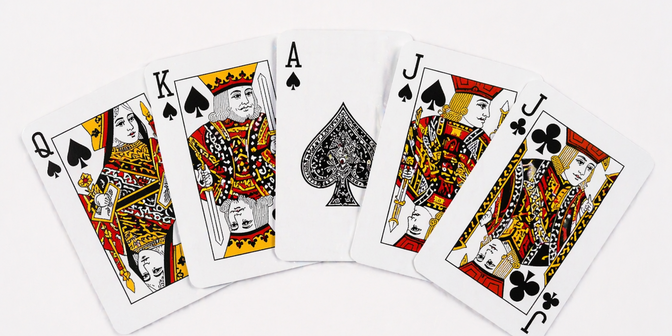
COLUMBUS, Ohio — A three-year observational study of recreational card-playing couples in the greater Columbus metropolitan area has found that regular Euchre participation — specifically the format in which husbands and wives compete on opposing teams — produces a pattern of escalating interpersonal conflict that researchers are now describing as "adversarial spousal conditioning," a previously unnamed phenomenon that they say divorce attorneys have long recognized without having a clinical term for it.
The study, conducted by a research team at a private behavioral sciences institute, followed 14 couples who played Euchre together at least twice monthly over the 36-month observation period. All 14 couples organized their games along gender lines, placing husbands and wives on opposing teams. In 11 of the 14 couples, the men won significantly more often than the women — a disparity researchers attribute to a combination of experience, risk tolerance in bidding strategy, and what the lead researcher described in a working draft as "an apparent compulsion among male players to call trump in situations where it is not strategically advisable, which occasionally works and is then discussed for an unreasonable length of time."
The issue, according to the study, is not the losing. Researchers found that wives in the study groups processed competitive losses at rates consistent with normal social recreation. The issue is what happens immediately after.
To be clear, the researchers emphasize, the early months were genuinely enjoyable. Couples described the game nights warmly — good company, competitive fun, the kind of low-stakes rivalry that makes a Friday feel like something. Several cited the wine as a contributing factor to the mood. Barefoot Pinot Grigio, in particular, appeared frequently in participant accounts, described by multiple couples as the unofficial beverage of the Euchre circuit in at least three Columbus-area zip codes.
"The first bottle, everybody's having a great time," one participant told researchers. "The second bottle, the men start getting a little louder about their hands. By the third bottle, someone is pointing at the table."
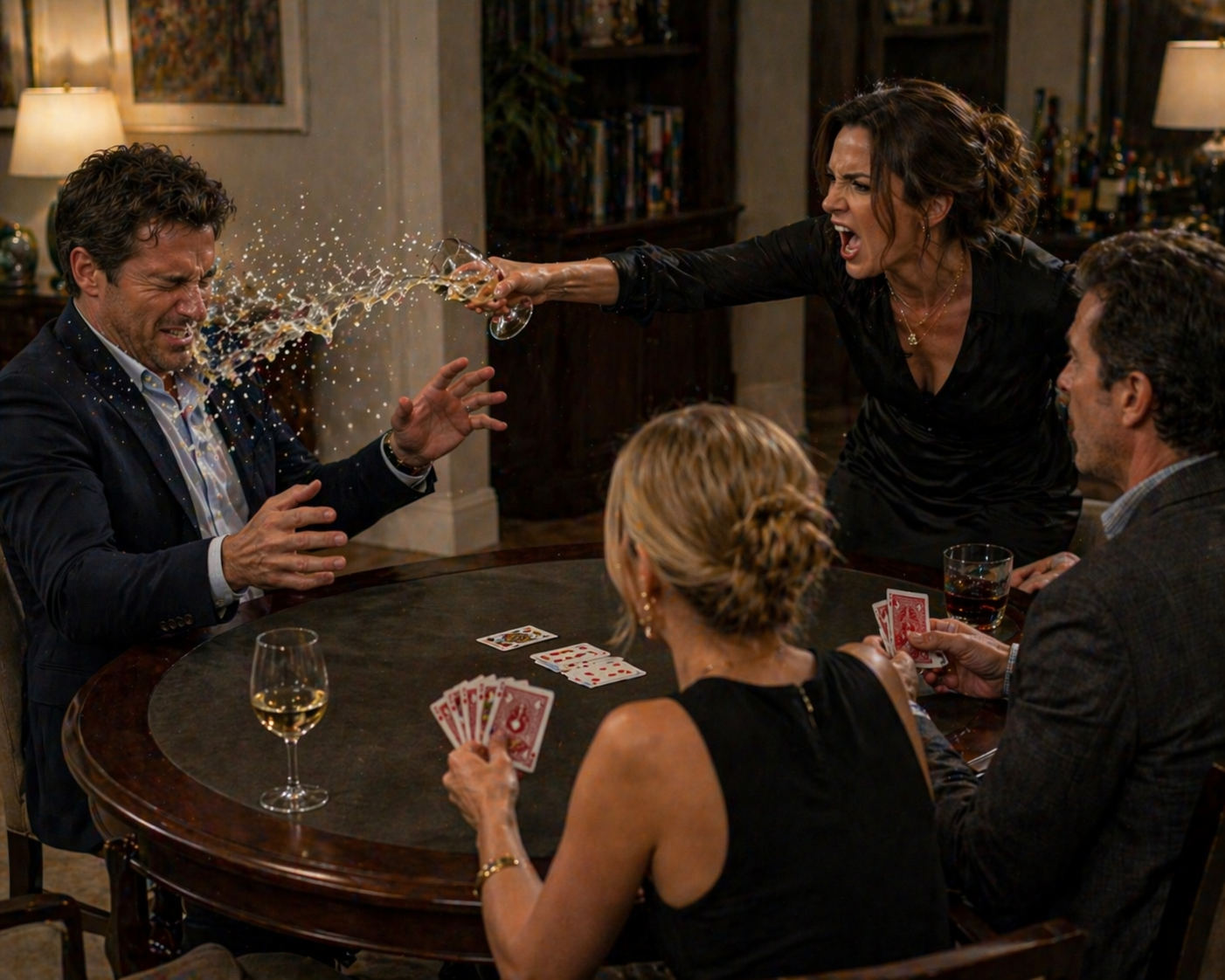
Researchers note that the third bottle of Barefoot Pinot Grigio appeared in participant accounts with a frequency they described as 'statistically striking and personally relatable.'
One evening in the second year of the study — a night researchers now refer to internally as "the Henderson incident" — the third bottle had been opened approximately forty minutes into the final game. By the end of the hand, a dispute had developed over whether a player had seen his partner's card before passing the deck. By the time the evening ended, two couples had left without saying goodbye, one husband had been asked to sleep in the guest room for the first time in six years, and the Hendersons had not hosted again.
"The Pinot Grigio does not cause the conflict," the lead researcher said carefully. "What it does is remove the part of the brain that decides not to say the thing you're thinking."
"The acute phase begins at the score of 10," said the study's lead author, who asked to be identified only as a researcher affiliated with the institute. "That is when the bragging starts. And the bragging does not stop at the table."
Euchre, for the uninitiated, is a trick-taking card game native to the American Midwest, played with a stripped deck of 24 cards — nines through aces — in which the trump jack and the same-color jack, known as the right and left bowers respectively, become the two most powerful cards in the deck. It is the dominant social card game in Ohio, Michigan, Indiana, and Wisconsin, and retains a significant following in Ontario. The game has been played continuously in this region since the mid-1800s and shows no sign of diminishing. This is part of the problem.
In the Columbus study, the most commonly reported conflict trigger was not the game itself but the post-game period — specifically, the car ride home. Eleven of the 14 couples reported a statistically significant increase in conflict during the 90 minutes following Euchre games that the men's team won. Researchers describe this window as "the debrief phase" and note that it was characterized, in most cases, by the male participants providing detailed, unsolicited analysis of their winning hands.
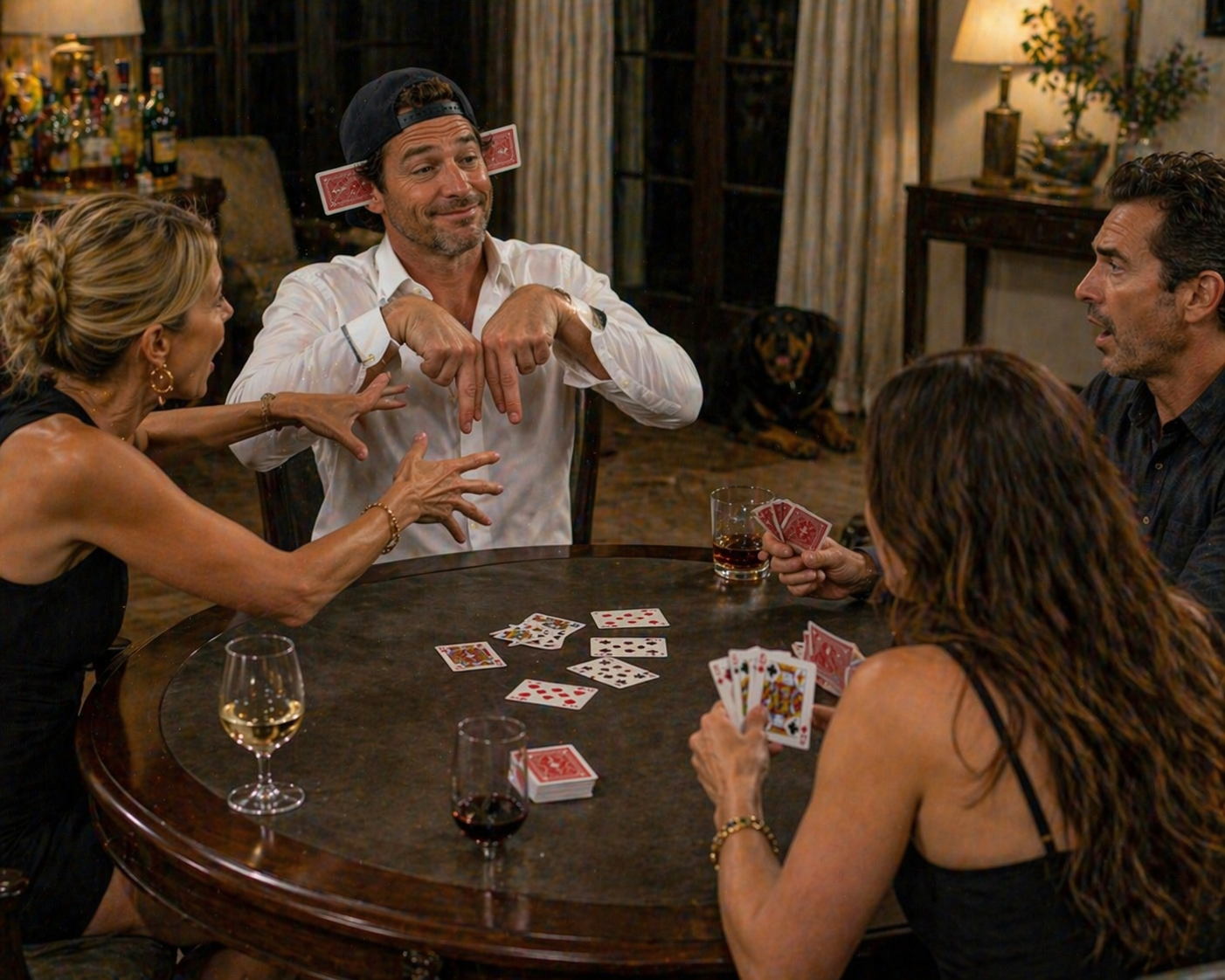
Participant accounts of post-hand celebration rituals varied. Several were not suitable for inclusion in the published study. This one was borderline.
"Every time he wins a hand," one participant told researchers, "he does this thing with his hands. Clasps them together, thumbs down. Like an udder. And then he just — looks at me. Until I do it." She paused. "I milk him. At the card table. In front of our friends. He makes the noises. He pretends to shoot milk. Usually at the wine." Another pause. "I have been milking my husband at the card table for six years. He has never once broken character."
The researchers stress that the sample size is small and the findings preliminary. They also stress that they were not expecting to find what they found. The study was originally designed to examine the social benefits of recreational card games on middle-aged relationship satisfaction. It pivoted.
Broader research on competitive spousal dynamics supports the general direction of the findings. A 2021 study published in the Journal of Social and Personal Relationships found that couples who engaged in zero-sum competitive activities together — games with a clear winner and a clear loser — reported higher short-term relationship tension than couples who played cooperative games. The effect was magnified, researchers noted, when one partner consistently outperformed the other. It was further magnified when the outperforming partner was aware of this pattern and found it amusing.
Euchre, researchers note, is structurally optimized for exactly this outcome. The game is short enough to play six or eight rounds in a single evening, producing a cumulative score that makes the margin of victory visible and undeniable. There is no partial credit. The scoring goes to ten. When you reach ten, you won. The other team did not.
"What we are describing is a specific mechanism by which an otherwise healthy marriage accumulates stress in a non-obvious way," the lead researcher said. "No single game night causes a divorce. But the study suggests that over months and years, the pattern deposits something into the relationship that doesn't fully dissolve. Therapists see the residue of it. They rarely know what caused it because nobody puts Euchre in their intake form."
The study recommends that couples who play Euchre together establish a post-game silence agreement covering a minimum of the drive home. It also recommends against the voices.
What They Left Out
One of the male participants in the Columbus study, reached by phone in Ohio, confirmed that he and his wife had withdrawn from the group after the second year.
He was asked why.
He said there had been an incident at the Hendersons'.
He was asked to describe the incident.
He said it started with the third bottle of Barefoot Pinot Grigio.
He was asked what happened after the third bottle.
He said his partner had called trump holding only the left bower and a nine and had somehow won the hand on a euchre, and that he had reacted in a way that, in hindsight, he would describe as disproportionate.
He was asked how his wife had characterized it.
He said she used a different word than disproportionate.
He said it was also the night he and his partner euchred the women three hands in a row in the same game, including one where his wife led trump and he picked up the right bower and took every remaining trick.
He was asked if he had celebrated this.
He paused for a long time.
"I may have done a lap," he said.
He clarified that by 'a lap' he meant he had stood up from the table and walked around the perimeter of the Hendersons' kitchen.
He was asked how his wife had responded.
He said she had not responded at the table. He said she had waited until the car.
He said the drive home was approximately fourteen minutes and that she had found things to say for all of them.
He and his wife have since taken up pickleball. He said it is going better. He said he tries not to do the lap anymore.
He said he sometimes still does the lap.
And now you know... what they left out.
What They Left Out
More wild facts from today in history →
The stories history recorded. The parts they didn't emphasize.
Spotlight Dispatch
Some of what you just read is real. Some of it is satire. We leave that as an exercise for the reader.