Wednesday, April 22, 2026
A note from the desk →TRUMP
We Have Stayed Out of the Religion Business. Then the President Posted Himself as Jesus and Said He Thought It Was a Doctor.
Spotlight Dispatch does not cover religion. We made a conscious decision early on to stay out of it. We are making a different decision today. Not because of the image. Because of the explanation.
By Rex Holloway • April 21, 2026
I want to be clear about something before we get into this. I am not a religious man. I have not been inside a church for reasons other than a wedding or a funeral since approximately 1987. I am not offended by blasphemy in any personal sense. I have heard things in Las Vegas alone that would make the average theologian retire on the spot. My threshold for outrage is not low.
So when I tell you that this one got to me — not because of the image, but because of the explanation — I want you to understand the weight of that statement.
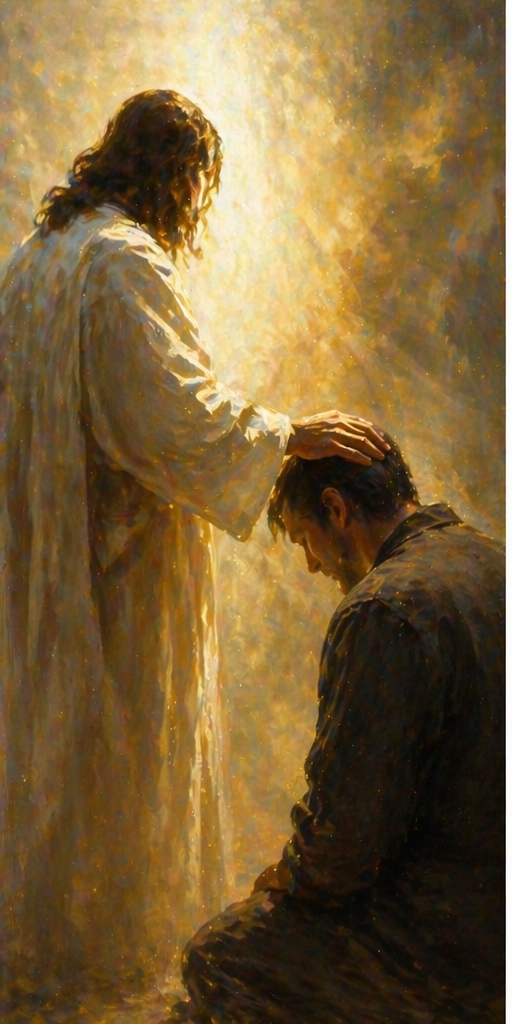
On April 13th, President Donald Trump posted to his Truth Social account an AI-generated image that depicted him in a white robe, placing his hand on a man's head in what appeared to be a healing scene. The image was, by every visual indicator available to the human eye, a depiction of Donald Trump as Jesus Christ.
The backlash came from places that do not typically produce backlash for this president. Not from the left. Not from the press. From his own people. From the evangelical base that has defended him through everything — through the grab-them remarks, through the payments, through the convictions, through the crimes and the lies and the two dozen women and the rest of it — the people who have stood in the parking lots of megachurches and prayed for this man, who have put his name next to scripture on yard signs, who have told their children that God placed him in power for a reason. Those people looked at the image and said: enough.
Trump deleted it.
Then a reporter asked him about it.
'I thought it was a doctor,' he said. 'It had to do with the Red Cross.'
I need you to sit with that for a moment.
The image depicted a man in a white robe performing what appeared to be a laying-on-of-hands healing in a scene that every human being who has spent thirty seconds in Western civilization would identify as a reference to Jesus Christ. The president of the United States looked at that image, posted it to his personal account, and then, when asked to explain himself, said he thought it was a doctor.
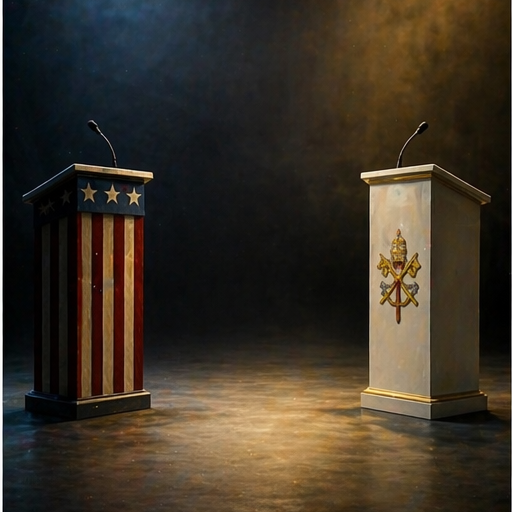
The Pope said the world is being 'ravaged by tyrants.' Trump called him 'weak on crime.' JD Vance told the Pope to stick to matters of morality. The Pope noted that war is a matter of morality.
JD Vance, who is a practicing Catholic and who presumably knows what Jesus looks like, told Fox News that 'the President was posting a joke' and that he took it down because 'he recognized a lot of people weren't understanding his humor.'
I have covered a lot of things in twenty years of journalism. I have sat in courtrooms and campaign offices and casinos and congressional hallways and the back seats of cars going places I probably should not have gone. I have heard a lot of explanations for a lot of behavior. I am telling you that 'I thought it was a doctor' is in the top three explanations I have ever encountered for anything.
Here is what makes it worse. The image was posted in the context of an ongoing feud with Pope Leo XIV, the newly elected leader of the Catholic Church, who had described the world as being 'ravaged by tyrants' — a remark that every sentient person on earth understood to be about the war in Iran and the man conducting it. Trump responded by calling the Pope 'weak on crime' and 'terrible for foreign policy.' Then he posted the Jesus image. Then he said it was a doctor.
Pope Leo, for his part, responded with the specific composure of a man who has taken a vow and intends to keep it. 'I will continue to speak out loudly against war,' he said. 'Looking to promote peace.' He did not mention the image. He did not need to.
Vance, meanwhile, told the Pope to 'stick to matters of morality.' The Pope's position, as best anyone can determine, is that condemning war is a matter of morality. Vance's position appears to be that this particular war is the exception. He did not elaborate on the theological framework that supports this view.
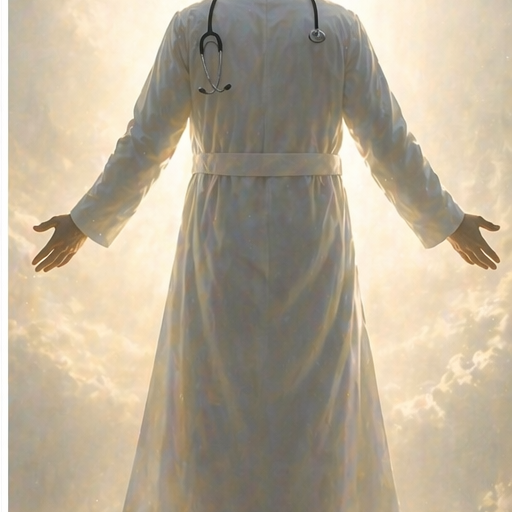
For the record, this is what a doctor looks like. The distinction, the President suggested, is subtle.
I have one more thing to say about this and then I will let it go.
We have been covering AI here at Spotlight Dispatch for months now. We have written about what it does to people — how it produces attachment, how it fills voids, how a technology optimized for engagement becomes, for some, something closer to need. We coined a word for it. We built a page for the people living it.
And now the President of the United States is using AI to generate images of himself as the Son of God.
The image, before it was deleted. Trump said he thought it depicted a doctor. Franklin Graham said it was being taken out of context. Neither explained what the context was.
I am not a religious man. But I know a man looking for something when I see one. And I know that whatever he's looking for, a doctor can't give it to him.
What They Left Out
The Franklin Graham response is worth noting, because Franklin Graham is worth noting. Graham, the son of Billy Graham and one of the most prominent evangelical voices in America, defended Trump. He said the image was 'being taken out of context.' He did not explain what context would make it not a picture of the President of the United States dressed as Jesus Christ.
There is a version of this story that is funny. I have told that version to several people in the last week, over drinks, in the way you tell stories about things that are so strange they have lapped absurdity and come out the other side as something almost like comedy. The audience laughs. Then they stop laughing. Then somebody orders another round.
The version that is not funny is this: a man with more power than almost any other person alive used a technology specifically designed to generate convincing images of things that did not happen to place himself in the iconography of a faith held by two billion people, during a war he started, while attacking the leader of that faith, and then claimed he couldn't tell the difference between Jesus and a doctor.
Either he knew exactly what the image was and said he didn't. Or he genuinely could not identify it.
I have spent a week trying to decide which possibility bothers me more. I have not reached a conclusion.
What I have reached is this: there is a category of event that is too strange to ignore and too important to mock. This is that category. The image matters less than the explanation. The explanation matters less than the fact that the explanation was accepted, defended, and moved on from within seventy-two hours.
We are going to keep covering what is happening. That is what we do here. We are going to keep saying what we see, in the order it happened, without telling you what to think about it.
But I reserve the right, occasionally, to note when something has crossed a line. Even a line I didn't know I had.
This crossed it.
And now you know... what they left out.
What They Left Out
More wild facts from today in history →
The stories history recorded. The parts they didn't emphasize.
Spotlight Dispatch
Some of what you just read is real. Some of it is satire. We leave that as an exercise for the reader.